documenta 14 is not owned by anyone in particular. It is shared among its visitors and artists, readers and writers, as well as all those whose work made it happen.…
My first encounter with Joaquín Orellana Mejía was in late May 2015, in his studio in Guatemala’s National Theater, amid his sound utensils (útiles sonoros). That the Guatemalan composer and innovator…
There aren’t enough magazines, or if you will, all existing magazines are useless. We are appearing because we believe we are responding to something. We are real. This excuses us from being necessary…
Stathis Gourgouris is professor at the Institute for Comparative Literature and Society at Columbia University, New York. He is the author of Synaesthetics of the Polity (forthcoming, 2018); The Perils…
Romantso translates to “novel.” It was also the title of the popular Greek magazine that featured novel-length stories in each of its issues. It first launched in 1934; when, in 1956, its price dropped…
It is obvious I have to solve this problem. From 1954 until 1958, so for four years, I listened halfheartedly to people who insisted that there is music present in my paintings. Since nobody could actually…
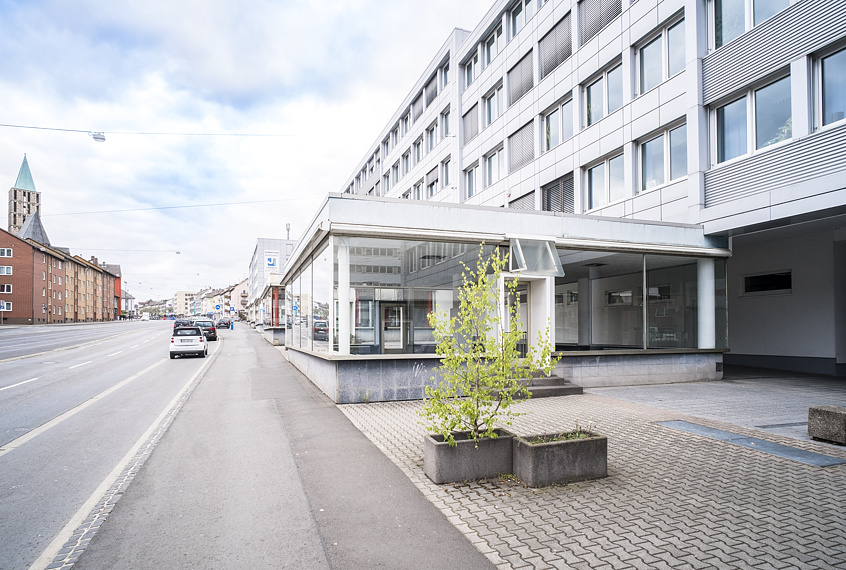
Many threads of Kassel’s history are woven together in this abandoned warehouse. Built in the 1950s on a location belonging to two of the city’s most prominent industrial dynasties, Henschel company…
I am trying to think “language or hunger,” but I inevitably supplant hunger with eating, not eating, and shitting, all of which differ from hunger. Hunger is abstract, and…
“Time is money (bastard)” sang the Swans in 1986. The same refrain—deprived of its punk rage—drives the subjects of Wang Bing’s Bitter Money. The film follows country people moving to the city to be employed as textile workers on daily or seasonal contracts…
In this meeting the artist Ross Birrell makes a special presentation of his upcoming publication “The Parasite” (2017). Done within the research framework of documenta 14, “The Parasite” is a text…
Within the complex allegorical structure of Gustave Courbet’s L’Atelier du peintre (Painter’s Studio, 1854–55), the Irish beggar woman constitutes not merely a dark note of negativity calling into…